
Top 7 Must-Read Book Series for Dystopian, Fantasy and Romance Fans
The seven series below cover different corners of the genre triangle. Some are pure dystopian with romance as a throughline (The Hunger Games, Divergent). Some are fae or high fantasy where romance is the engine (A Court of Thorns and Roses, Throne of Glass). One blends supernatural powers into a post-apocalyptic world (Shatter Me). One retells fairy tales through a science fiction frame (The Lunar Chronicles). The Selection sits closer to competition romance than true dystopian. Each entry names what the series actually is, how long it runs, whether it is complete, and who it fits best.
1. The Hunger Games Trilogy by Suzanne Collins
Best for: readers who want political dystopian stakes at the center and romance as a throughline, not the engine.
Three books (The Hunger Games, Catching Fire, Mockingjay), complete. Two standalone prequels exist separately from the trilogy: The Ballad of Songbirds and Snakes (2020), which follows a young President Snow, and Sunrise on the Reaping (2025), which covers Haymitch Abernathy and the Second Quarter Quell.
The setting is Panem, a post-apocalyptic North America divided into a Capitol and twelve Districts, each year forced to send two young tributes to fight to the death. There is no magic, no fae, no supernatural element: this is pure dystopian political fiction with survival action. The love triangle between Katniss, Peeta, and Gale is real and develops across all three books, but it is secondary to the revolution arc. Readers who come primarily for romance will find it; readers who come primarily for political stakes and action will find more of what they need here than anywhere else on this list. Content is YA-appropriate throughout, with violence but no explicit scenes.
This is the series that defined the YA dystopian wave of the early 2010s and is still the clearest version of it. Start here if you have not read it, and use everything else on this list as a measure of how far from or close to this template each series sits.
The benchmark the rest of this list is measured against: the sharpest YA dystopian written.
2. A Court of Thorns and Roses by Sarah J. Maas
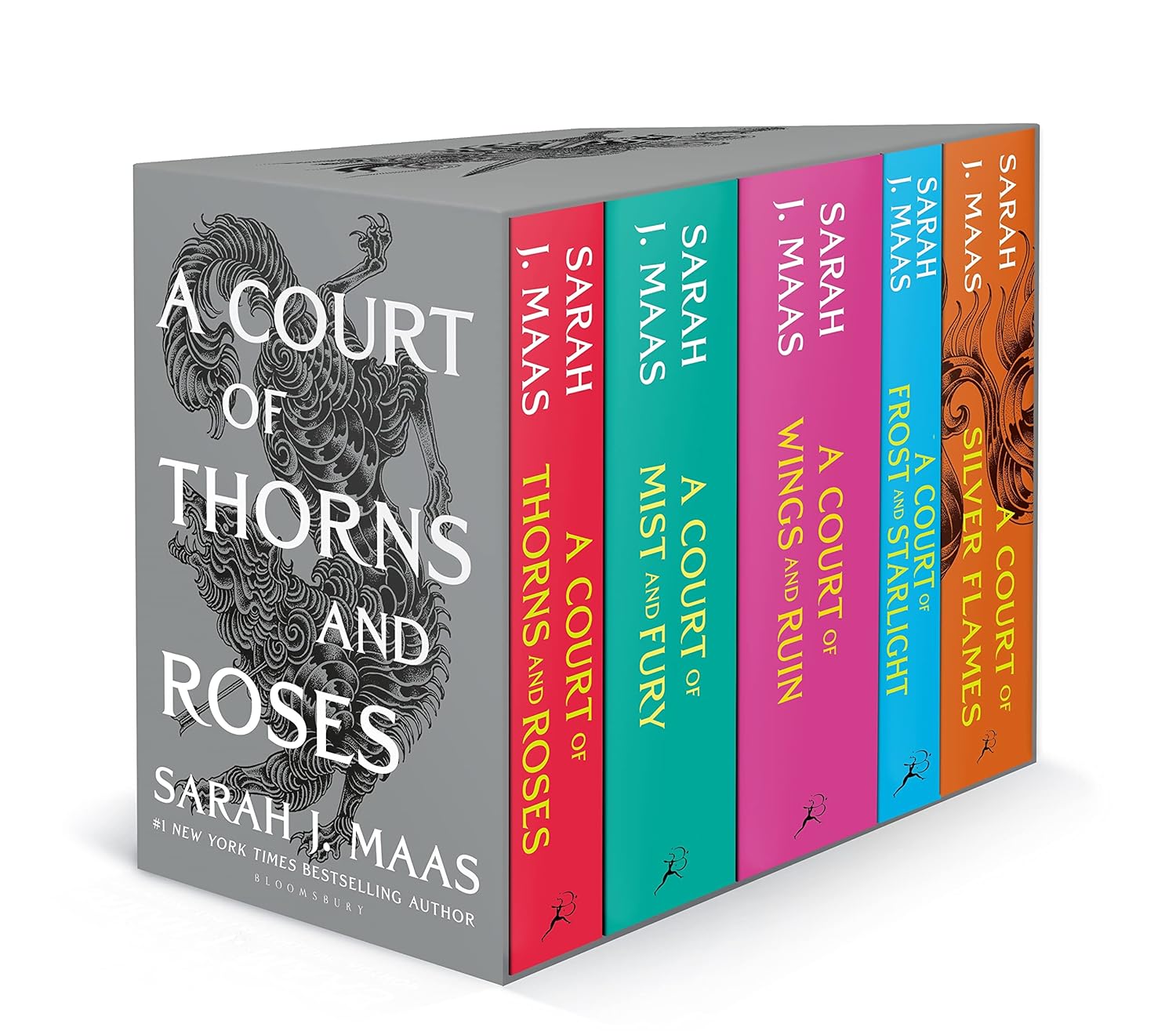
Best for: readers who want fae fantasy romance with heavy romantic tension, and who are comfortable with explicitly adult content from book two onward.
Five books (A Court of Thorns and Roses, A Court of Mist and Fury, A Court of Wings and Ruin, A Court of Frost and Starlight, A Court of Silver Flames), with more books planned. This series is ongoing.
This is not dystopian. The world of Prythian is a fae realm divided between courts, and the human world exists separately beneath it. The first book is a Beauty and the Beast retelling: Feyre, a human huntress, is taken to the Spring Court as punishment and falls for its High Lord, Tamlin. By the second book (A Court of Mist and Fury, widely cited as the best entry), the scope expands, the central romantic pairing shifts to Rhysand, and the spice level rises sharply to explicit. From book two onward, this is New Adult rather than YA. A Court of Frost and Starlight (book four) is a shorter companion piece bridging into book five, which focuses on Nesta and Cassian and is the most explicit in the series.
Content level: Low in book one, explicit adult content from book two onward. Not appropriate for younger YA readers.
If you want to compare Maas’s two major series before committing, start with Throne of Glass (entry 6 below): it is set in a different world entirely but shares the voice and romantic intensity, and it is complete.
The fae fantasy romance series most readers mean when they say they want “something like ACOTAR”: it becomes what they are describing beginning with book two.
3. Divergent Trilogy by Veronica Roth
Best for: readers who want the political-cage structure of The Hunger Games with a more central romance and a faction-based society to interrogate.
Three books (Divergent, Insurgent, Allegiant), complete. A companion novella collection, Four, narrates events from the first book in Four’s perspective and adds backstory not present in the main trilogy.
The setting is future Chicago, society divided into five factions defined by a single virtue each (Dauntless for bravery, Erudite for intelligence, Abnegation for selflessness, Candor for honesty, Amity for peace). Tris Prior doesn’t fit cleanly into any one faction, making her a “Divergent” and a threat to the faction leaders. There is no magic or supernatural power here: the genre is pure dystopian YA. The Tris/Four romance is more central to the story than the Katniss love triangle in Hunger Games and develops consistently across all three books. Content is YA-appropriate throughout.
One factual note: the ending of Allegiant is deliberately and divisively unconventional for YA. Reader opinion splits sharply. Going in knowing this, rather than being blindsided, tends to produce a fairer read of the full trilogy.
The faction-society dystopian: closer in template to Hunger Games than anything else here, with the romance given more weight.
4. The Selection Series by Kiera Cass
Best for: readers who want romance at the center with a dystopian setting as backdrop rather than subject.
Five books (The Selection, The Elite, The One, The Heir, The Crown), complete. The first three follow America Singer; the final two follow her daughter Eadlyn.
The dystopian setting (a future North America with a rigid caste system, monarchy, and ongoing rebel threats) is functional backdrop rather than the focus. The actual subject is a competition for a prince’s hand, closer in structure to a reality television romance than to the political dystopians elsewhere on this list. America Singer enters the Selection not wanting to be there and finds herself increasingly conflicted between Prince Maxon and the boy she left at home. Cass is not interested in interrogating the caste system or the political architecture; the books are interested in romantic tension, rivalry between competitors, and the particular pleasure of a protagonist who keeps changing her mind about what she wants. Content is clean throughout: YA-appropriate, no spice, no graphic violence.
The Selection is the most romance-forward series on this list. If you came here expecting the political depth of Hunger Games or Divergent, this will disappoint. If you came for the romance with a crown at the end, it delivers exactly that.
A competition romance with dystopian dressing: the Bachelorette premise, fairy-tale setting, clean content.
5. Shatter Me Series by Tahereh Mafi
Best for: readers who want a character-driven series with a distinctive prose style and a slow-burn enemies-to-lovers romance at the center of a post-apocalyptic world.
Six books (Shatter Me, Unravel Me, Ignite Me, Restore Me, Defy Me, Imagine Me), plus several novellas (Destroy Me, Fracture Me, Shadow Me, Reveal Me, Find Me), complete.
The world is post-apocalyptic and authoritarian, but Juliette’s power (a lethal touch that drains life from anyone she makes physical contact with) places this closer to superhero fiction than pure dystopian: the fantasy element here is the supernatural ability, not a fae world or secondary-world magic system. Mafi’s prose style is the series’ most defining feature: stream-of-consciousness narration with struck-through text showing Juliette’s suppressed thoughts alongside what she actually says. Readers who connect with this technique find it immersive; readers who don’t find it exhausting. The Warner/Juliette romance is the series’ most discussed element. Warner is the primary antagonist when the story opens, and the slow pivot in how Juliette (and the reader) understands him drives books two and three. The original trilogy (books one through three) stands on its own; the continuation (Restore Me through Imagine Me) adds scale and a larger ensemble. Content is low to moderate: YA-appropriate in the original trilogy, slightly more intense in the continuation.
The series where the prose is part of the experience: either the struck-through narration clicks on page one or it doesn’t.
6. Throne of Glass Series by Sarah J. Maas
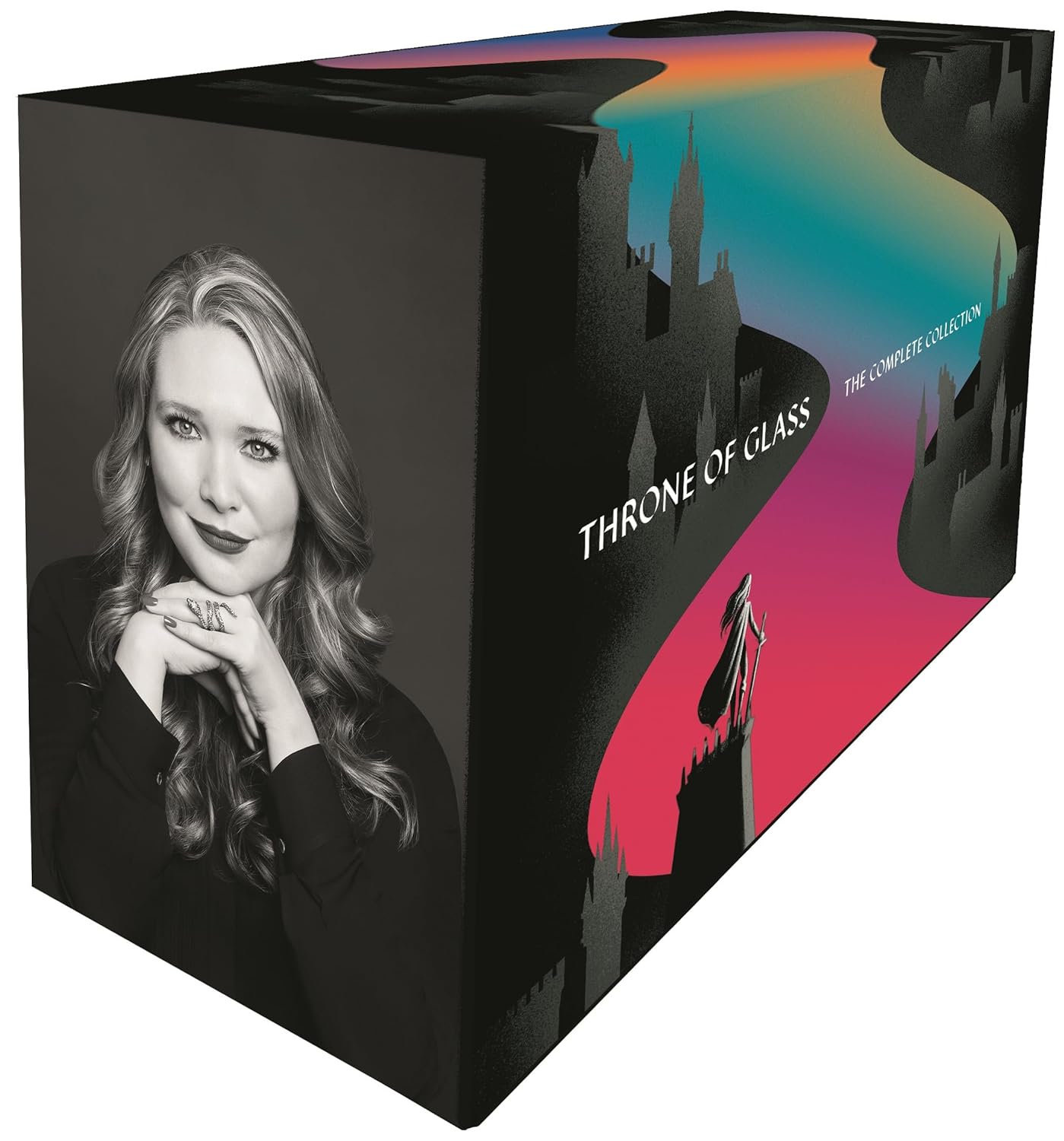
Best for: readers who want a complete high fantasy series (seven main novels plus a prequel collection) following an assassin-to-queen protagonist, with romance that escalates in intensity across the series.
Eight entries total: The Assassin’s Blade (prequel novellas, best read after Crown of Midnight), then seven main novels: Throne of Glass, Crown of Midnight, Heir of Fire, Queen of Shadows, Empire of Storms, Tower of Dawn, Kingdom of Ash. Complete as of 2018.
This is not dystopian. The continent of Erilea is a secondary world with magic systems, ancient gods, and courts, fully separate from our world. Celaena Sardothien (the name she uses when the series begins) is a slave-turned-assassin who must compete to become the king’s champion. The scope expands substantially across the seven books: what begins as a contained court-competition arc becomes a war for the fate of the world, and the protagonist’s identity shifts accordingly. The series takes longer to accelerate than ACOTAR: the first two books are narrower in scope, and the series opens up significantly from Heir of Fire onward. The arc across all seven books is widely regarded as her most fully realized series work.
Content level: Lower than ACOTAR in the early books, escalating to explicitly adult content in Empire of Storms and Kingdom of Ash. The later books are New Adult rather than YA.
For readers new to Maas, starting here before ACOTAR has a practical advantage: the series is complete, meaning no waiting for future books.
Seven books to build a queen: the payoff in Kingdom of Ash is proportional to what all seven books set up.
7. The Lunar Chronicles by Marissa Meyer
Best for: readers who want fairy-tale retellings with a found-family ensemble in a science fiction setting, with romance that stays clean across all four books.
Four main books (Cinder, Scarlet, Cress, Winter), complete. Fairest (a prequel novella from Queen Levana’s perspective) and Stars Above (a short story collection) are companion pieces, not required reading.
The genre is science fiction, not fantasy in the traditional sense, and not dystopian in the political sense. The setting is a future Earth where a Lunar kingdom on the moon uses a bioelectric mind-manipulation ability to maintain dominance. Each book retells a different fairy tale while building one continuous overarching story: Cinderella (Cinder), Little Red Riding Hood (Scarlet), Rapunzel (Cress), Snow White (Winter). The ensemble grows with each book, so the later volumes carry more romantic pairings and a found-family dynamic that the earlier ones don’t have the space for. The fairy-tale frame gives each book its own emotional shape, which keeps the series from feeling repetitive despite following the same conflict across four volumes. Content is clean throughout: the most YA-appropriate series on this list and the most accessible entry point for younger readers.
What Lunar Chronicles does that nothing else here does: the ensemble arrival in Winter, with four couples and one mission, is one of the most satisfying payoffs in YA series fiction.
Four fairy tales, one rebellion: the ensemble grows book by book, and the finale earns all of it.
Where to start
If seven is still too many:
- Dystopian first: The Hunger Games for political stakes, Divergent if you want more romance weight alongside the faction premise.
- Fantasy romance first: Throne of Glass if you want a complete series before investing (also a good primer on Maas’s voice before ACOTAR). A Court of Thorns and Roses if you want to start with the one readers talk about most, knowing book two is where it becomes that series.
- Romance at the center: The Selection for the lightest content and cleanest romance. Shatter Me for enemies-to-lovers with a distinctive prose style.
- Younger readers or content-sensitive: The Lunar Chronicles and The Selection are clean throughout. The Hunger Games and Divergent are YA-appropriate. Shatter Me escalates slightly in the continuation. Throne of Glass and ACOTAR escalate to explicitly adult content in later books.
- Complete series only: The Hunger Games (3 books), Divergent (3 books), The Lunar Chronicles (4 books), The Selection (5 books), Shatter Me (6 books), and Throne of Glass (7 books) are all finished. ACOTAR is ongoing.
More fantasy and dystopian recommendations are available by genre if you want to keep going after these.
And That’s It
Seven series across three subgenres, ranging from three to seven books and from clean YA to explicitly adult. Match your starting point to what you want most: the political cage, the fae court, or the romance, and let the first book tell you where to go next.
Eternal Reads