
Books Where the Main Character is the Villain
The most unsettling villain fiction puts you inside the perpetrator’s perspective and provides no exit. The six novels below do this through different techniques: through unreliable narration, through structural contrast, through a prose voice that refuses to change register regardless of what it is describing. What they share is that the villain’s consciousness is the entire subject of the book.
1. Lolita by Vladimir Nabokov

Best for: readers who want to study how a narrator constructs the reader’s sympathy, and what happens when you start to notice the construction.
Humbert Humbert is a meticulous self-narrator, and the novel is built entirely from his telling. He frames, deflects, aestheticizes, and addresses the reader as a fellow sophisticate, constructing a version of events in which he is the one who suffers and the one who loves. Nabokov’s technical achievement is the gap between what Humbert says and what the prose reveals when he is not managing his own language carefully enough: the moments of cruelty that slip through the rhetorical surface, the deflections that expose more than they conceal. You cannot read the novel from outside Humbert’s narration, because he speaks to you directly and implicates you in his perspective before you can establish any distance from it. That implication, and the moment you notice it, is what the book is formally about. Published in Paris in 1955, it remains the most technically precise study of self-exculpatory narration in fiction.
The novel that asks how a narrator engineers your sympathy, and what it means that he succeeded.
2. American Psycho by Bret Easton Ellis
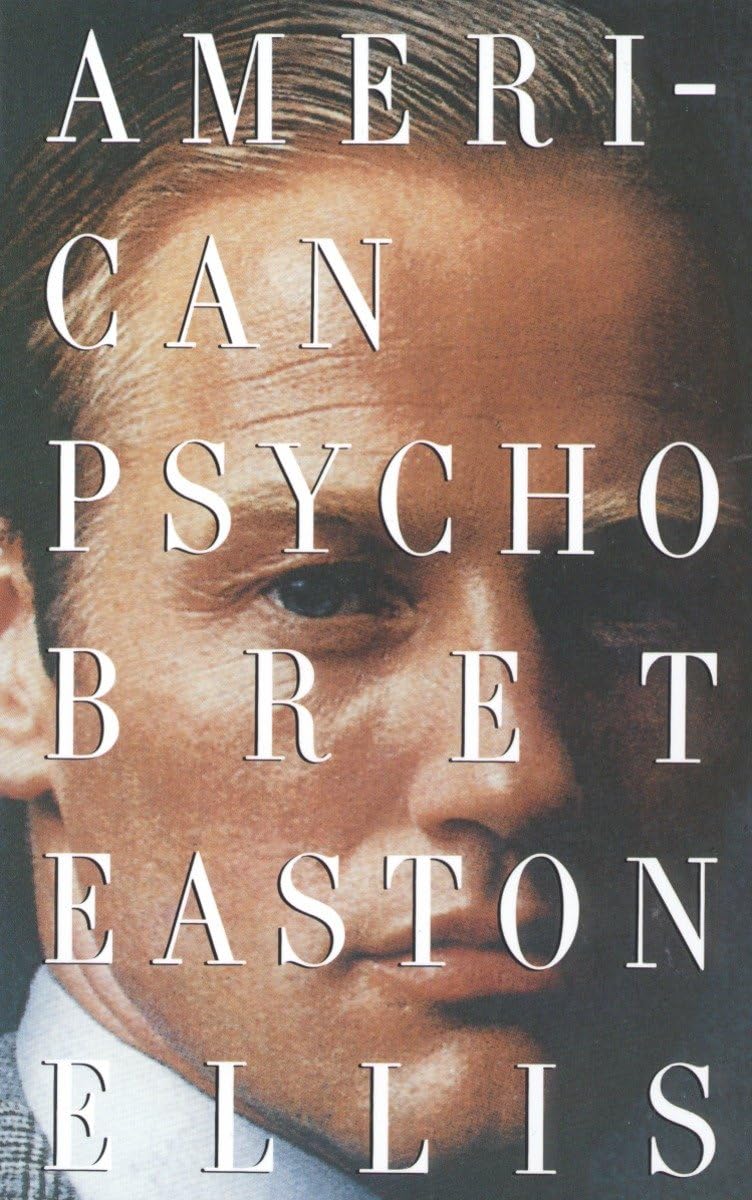
Best for: readers prepared to spend a novel inside a narrator whose reliability is never established, and to decide for themselves what actually happened.
Ellis gives Bateman a confessional interior voice and never provides any external verification for what that voice reports. The murders, the escalating extremity, the specific acts that make the novel notorious: none of it is confirmed by anyone else in the book. Colleagues fail to react. The world around Bateman proceeds normally. Ellis built the ambiguity into the structure: whether the violence is actually happening or whether Bateman is a mind confabulating the violence he cannot commit is left genuinely open. The more disturbing reading is the second one. If the horror is entirely imaginary, you have spent four hundred pages inside the fantasies of a man whose inner life is the argument the novel is making about what late-capitalist masculinity produces. Patrick Bateman may be a killer, or he may be a man who desperately wants to be one, and Ellis never resolves it.
The villain who may not be real, and whether that makes the novel more disturbing or less.
3. The Talented Mr. Ripley by Patricia Highsmith
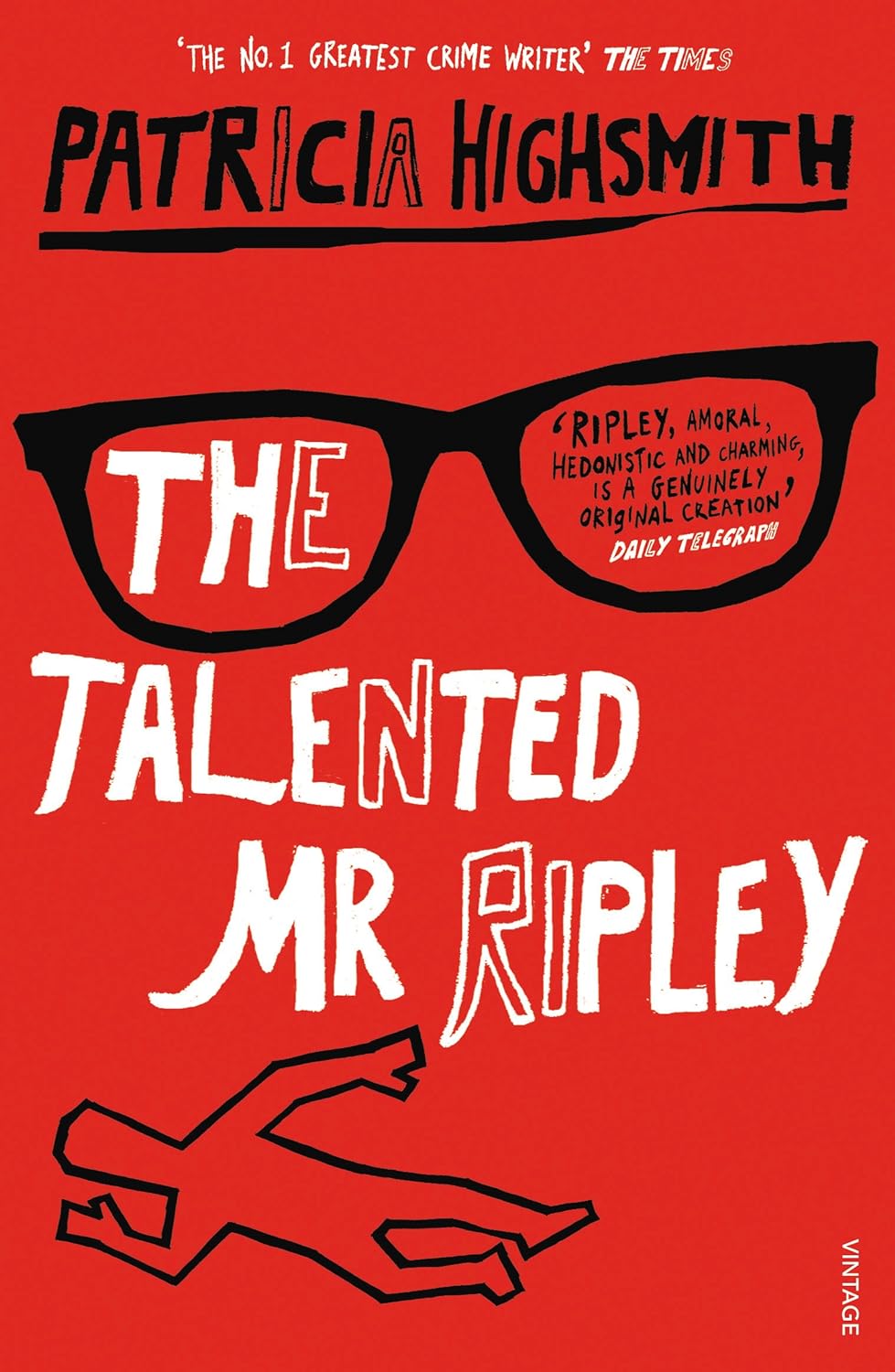
Best for: readers who want a villain they will find themselves calculating on behalf of, despite knowing what he does.
Tom Ripley arrives in Europe broke, tasked with bringing a wealthy American’s pleasure-seeking son Dickie Greenleaf back home, and leaves having killed Dickie and assumed his identity. Highsmith’s achievement is making this seem almost internally logical: Ripley wants the life Dickie has, he has the social precision to perform it, and the novel follows the cool efficiency with which he resolves each complication that arises after the first one. His sociopathy reads, in Highsmith’s telling, as a survival mechanism applied with unusual precision to a situation where the only obstacle between him and what he wants is another person. By the time he has secured his position, you have been tracking his perspective so closely that his reversals read as problems dispatched. The Talented Mr. Ripley is the first of five Highsmith novels following him, and it establishes why you keep following him.
The sociopathic con man whose perspective is rendered so precisely that his crimes feel like solutions.
4. The Collector by John Fowles
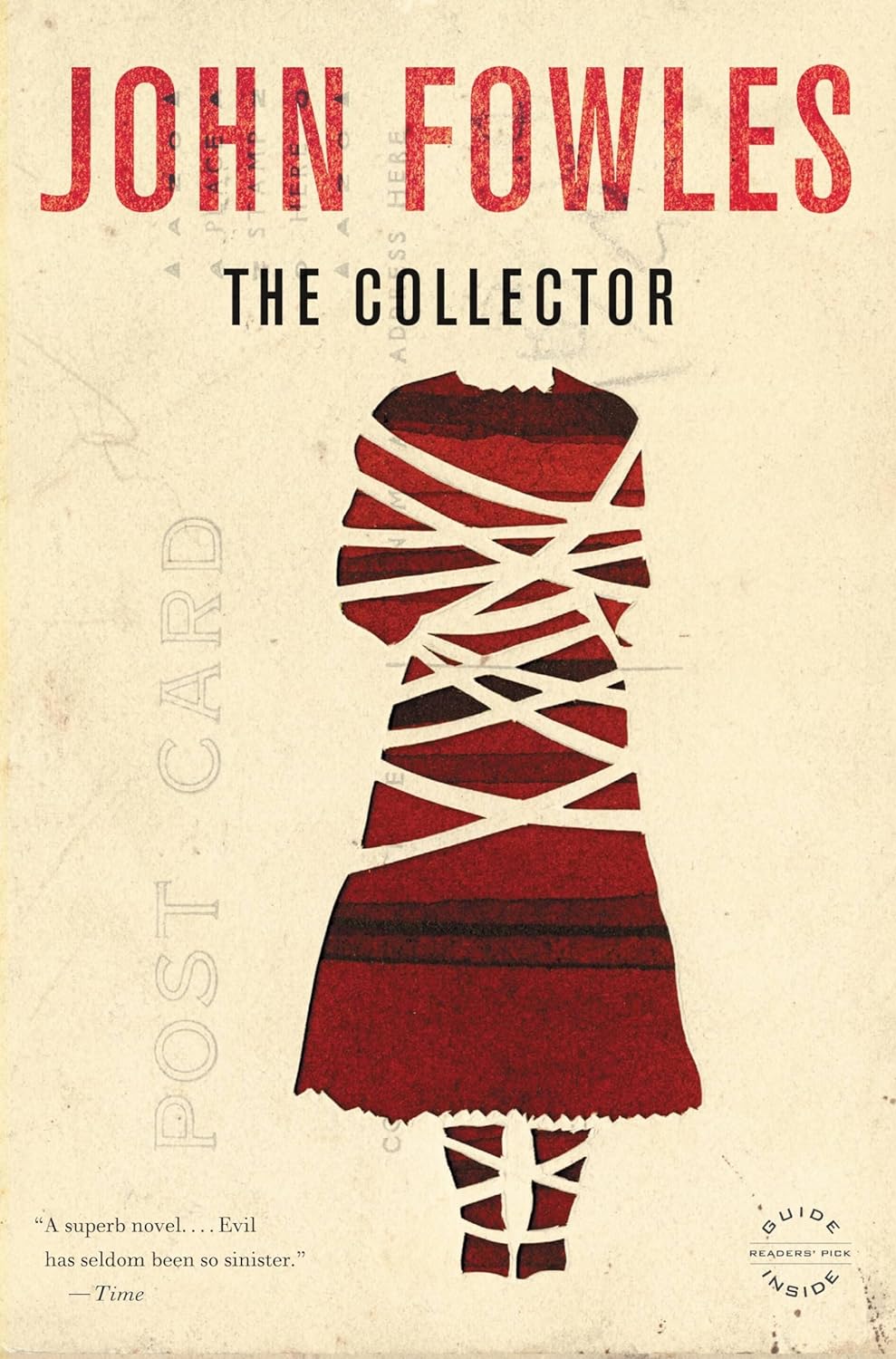
Best for: readers who want to see what a novel reveals when it gives equal narrative space to the captor and the captive.
Fowles structures the novel in two halves: Clegg’s narration first, in which he explains his feelings and justifies his decisions with a complete sense of his own reasonableness, then Miranda’s diary, written from inside captivity. The structural gap this creates is the novel’s central mechanism. In Clegg’s account, he is careful, attentive, and devoted; his actions make internal sense within his own perspective. Miranda’s diary records what those same actions look like from the cellar. Fowles does not editorialize between the two accounts. The gap speaks for itself, and it is wider than almost any reader expects going into Miranda’s section. What the structure exposes is how completely a first-person narrator can fail to understand his own conduct while remaining fully articulate about everything else. Published in 1963, it remains the most technically elegant demonstration in fiction of that particular distance.
Two narrators, one story, and the gap between them is everything Fowles wants you to see.
5. The Killer Inside Me by Jim Thompson
Best for: readers who want a crime novel narrated entirely from inside a perpetrator’s perspective, in a prose voice that never once slips.
Lou Ford is a deputy sheriff in a small Texas town in the 1950s, and he is by all appearances a decent, slow-talking, dependable man. Thompson writes the entire novel from inside Ford’s perspective, in a voice that is flat, almost folksy, and gives no indication of what it is narrating. Ford kills people, and he tells you about it in that same even register, with no break in tone between the mundane and the violent. The technical achievement of the novel is that consistency: the prose surface never gives way, and the reader has no access to any corrective perspective outside Ford’s account. The Killer Inside Me was published in 1952, before the first-person crime novel had established the conventions Ford is quietly violating. The result is one of the earliest studies in fiction of what it costs to maintain two lives, and what happens when they stop being separable.
The deputy sheriff whose flat, affable prose voice never breaks, and that is the horror.
6. If We Were Villains by M.L. Rio
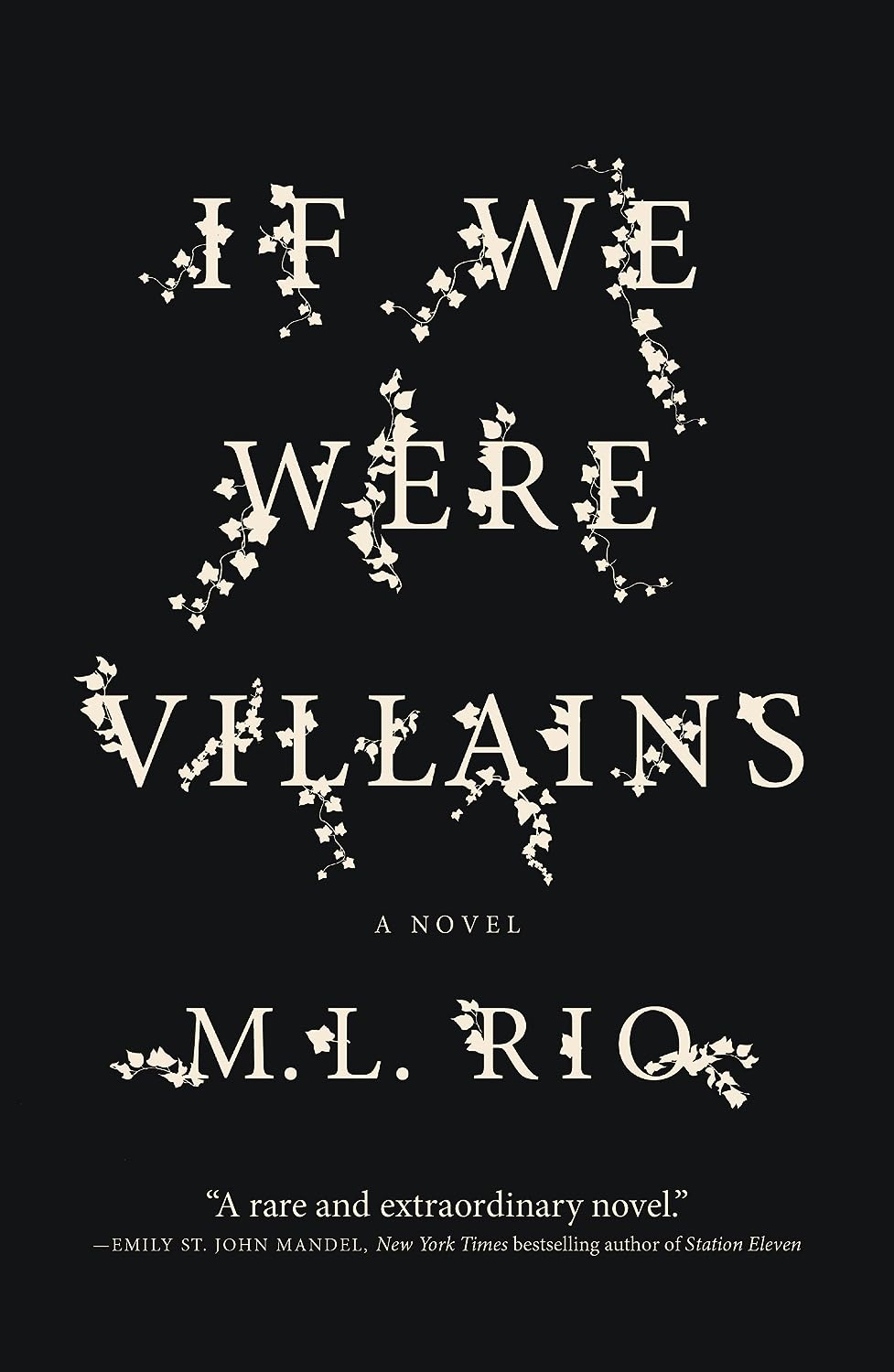
Best for: readers who want a literary thriller where the unreliable narrator is more structurally complex than the genre standard, and where the villain question has no clean answer.
Seven students at a Shakespeare conservatory are assigned dramatic roles so completely that they begin inhabiting them off-stage. Oliver, the narrator, tells the story in retrospect, ten years after leaving prison for a death that occurred in the group. Rio’s structural intelligence is in the retrospective frame: Oliver knows the full story, you know he knows it, and the question of what he is withholding becomes the engine of the novel. The Shakespeare element is structural rather than decorative: these are people who have spent years learning to perform emotion on demand and who have internalized tragedy as a formal pattern, and the novel is about what happens when life starts following the shape the plays have trained them to expect. If We Were Villains works simultaneously as a whodunit and as an inquiry into whether performance eventually replaces the person doing it.
Seven actors, one death, and a narrator who has had ten years to decide what to tell.
Several of the titles here appear in books that will shock and disturb you as well, but from a different angle: that post examines Lolita, American Psycho, and The Collector through the experience of reading them (the seduction of prose, the tolerance test of shock, the ordinariness of obsession), while this post examines how those same novels use narrative structure to create complicity. For crime fiction where the psychological mechanics are the draw, the psychological thrillers list covers that territory.
Eternal Reads